


Continuing from The Battle of Achilles (Part 2).
Having spent hours wading up the rocky rivers of the Aisne Valley with only the sound of rushing water and the light of my headtorch for company, stumbling into a quaint Belgian village was a cause for celebration.
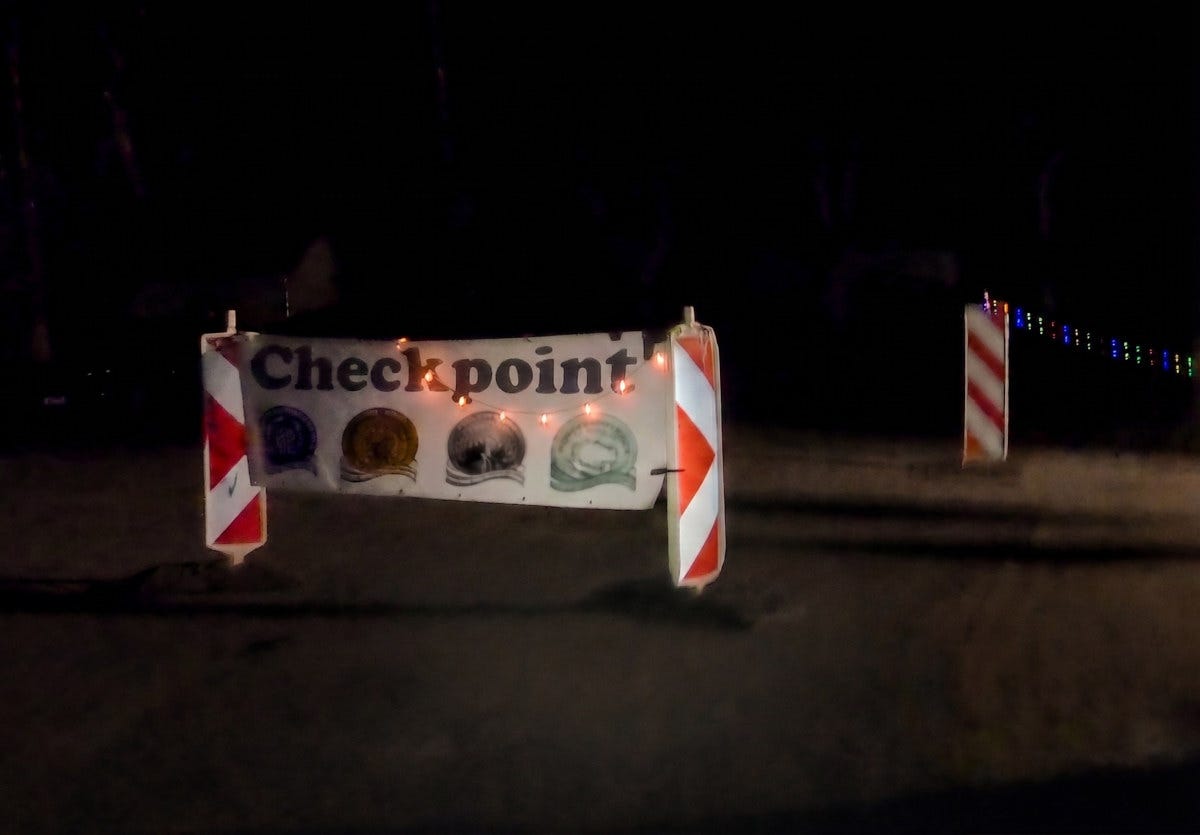
After a couple of minutes trotting up what was presumably its main street, I sighted a Legends Trail banner with a string of bulbs draped across it, offering up a meagre glow. It wasn’t much to behold; but to this sullen traveller grappling with advanced plantar fasciitis, it looked like Christmas at Harrods.
As I entered CP1 I spotted a pile of ten duffel bags waiting to be transported to the next checkpoint, and inside the main room I counted ten runners. Ten bags and ten runners meant I must be in around 20th place.
20th place… I let out a sigh. I’d started off leading this race, until my Achilles detonated like a landmine and I’d started bleeding places. At first it was just the occasional drip, but it was progressing to a major bleed. Given this exponential rate of haemorrhaging I’d be timed out long before I got close to the finish.
The finish… I let out a louder sigh. I’d been contemplating DNF’ing here at CP1, though I didn’t feel so inclined now. I would push on, and try to reach my red line at CP3. That was all I’d intended to achieve at the outset. That was what I would do.
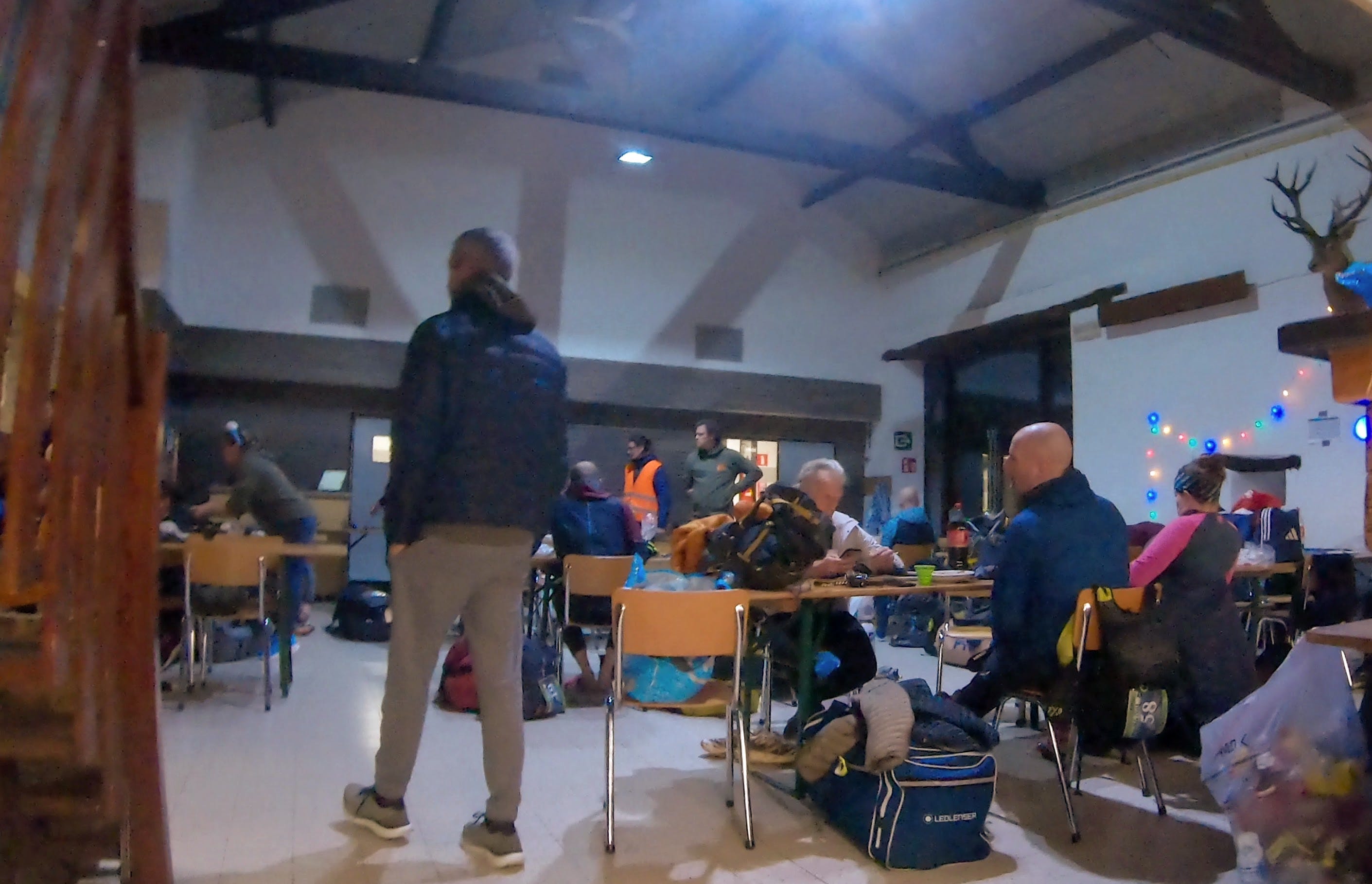
I collapsed into a chair, extending my leg to relieve my Achilles. A few hopeful words attracted an English-speaking volunteer, who kindly prepared one of my dehydrated meals and handed it to me, ready to eat. As someone who’d endured a diet of marzipan for ten hours straight, I really appreciated the change.
While I ate my mind wandered back up the trail, reflecting on the first leg of Legends 350. The course began easily enough, building its undulations to a crescendo at the halfway-point through that muddy, splashy forest trail. But it was the last third that had been really gruelling. A gnarly, technical trek through rocky rivers, which could at times have passed for an aquathlon. The only respite came from those muddy hikes up the valley’s hillsides, that served no obvious purpose other than to knacker my Achilles.
The weather had been favourable though, and lengthy river stretches excepted, the ground had otherwise been runnable. Factoring in water stops at half marathon intervals, overall it amounted to a more accessible first leg than I’d expected, considering Legends’ reputation.
Looking ahead, both CP2 and CP3 legs were little more than a marathon apiece. They were building up to what was, so I gathered, a particularly long and arduous expedition to CP4 across the High Fens. Which was irrelevant for me, given I would DNF at CP3. My Achilles only needed to cling on for two short legs.
My gaze fell to my drop bag, which sagged open, looking quite sorry for itself with so little inside. My two pairs of spare socks were staring at me, so I took the hint and changed into dry footwear, before packing up and heading back outside. It was time to risk my Achilles once more, in the quest to answer Jandalf’s question: Legends, or Spine - which is tougher?
It only took a minute to leave the little hamlet of Ollomont behind and disappear into the pitch blackness of the Ardennes. Yet this was different to before. Through the bubble of my headtorch beam, I could see rolling farmers’ fields, and a gradually descending single track road. This looked far too easy for Legends.
Downhill tarmac presented an ideal opportunity to coast along and make up time, but my stiff Achilles was having none of it. It forced me to walk this eminently runnable section, leaving me feeling immensely frustrated.
After two kilometres of mental anguish, I heard the unmistakeable sound of rushing water. “Oh for fuck’s sake, let this not be another Ourthe river wading trial”, I pleaded with the dark Ardennes. As if responding to my appeal, the route swung a left and tracked a beautiful, freshly tarmacked road running parallel to the river. But this was short-lived, and the wading cycle duly resumed. Drop down to swim the Ourthe, climb back up out of the valley; rinse and repeat, rinse and repeat.
Feeling hunger, listlessness and drowsiness beginning to overpower me, I popped a caffeine pill and forced down some more marzipan. I reminded myself that, despite all its challenges, this route was considerably more agreeable than the freezing -18°C temperatures, gale force winds and metre-deep snow of the Winter Spine.
The caffeine kicked in just as the rising of the sun birthed a new day. Finally I seemed to be heading away from the Ourthe to a place where the trails were easy-going and free-flowing. The fact that some of them were free-flowing streams was not unusual for an Englishman.
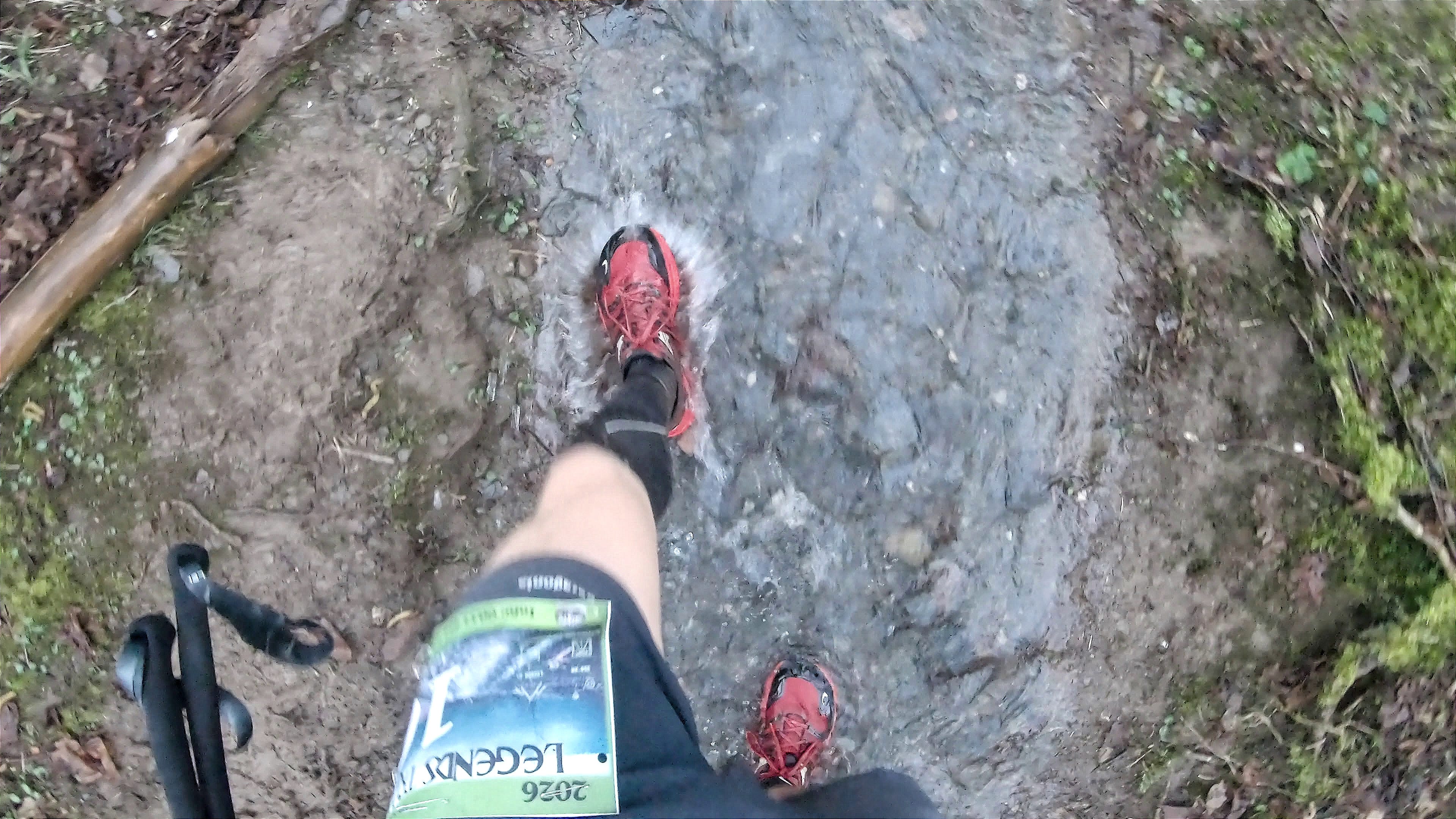
My foot grew more painful by the hour, but my fresh, positive mindset handled it well. I used my poles to offload weight onto my upper body, and I reminded myself that it genuinely wasn’t that far to CP2.
I had no inkling of it at the time, for the rural road crossing gave nothing away, but the route actually took me within a few hundred metres of the world-famous Achouffe brewery. All I experienced was a mix of runnable countryside trails and flat, tarmac roads that conveyed me through to Dinez fairly efficiently.
It was on the climb heading north out of town where I felt conditions starting to shift. There was a chill wind up here, so I stopped to don a windproof, and my toasty waterproof mitts. My watch explained the cause of the change in circumstances: I had ticked over 500 metres elevation, a height I hadn’t seen since last night.
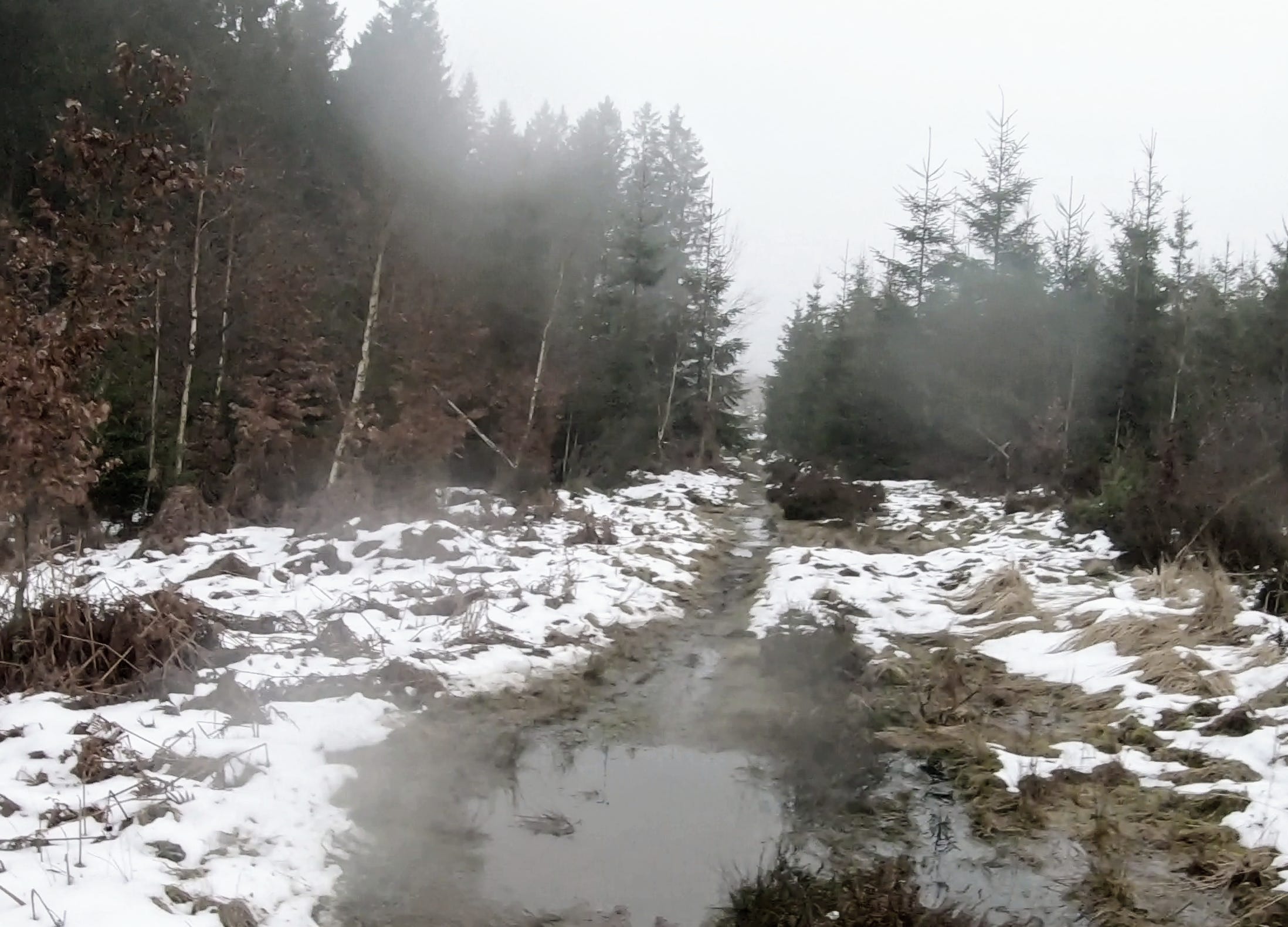
The sky was off-white, and the pines either side of me appeared dull, and deathly. Up here, my mood flickered with the wind, though never dipping too far. My jacket-and-shorts combination worked in my favour, allowing just enough exposure to the conditions for things to feel fresh & invigorating.
Yet no amount of positivity could help my pace, which continued to suffer in tandem with the pain in my heel. I was struggling through the forests south of Chabrehez when a pair of local Belgian runners caught me up.
Milan Sels spoke English, and explained we were travelling through one of the key battlegrounds of the Battle of the Bulge. Here, Americans and Germans had dug in and rained shells upon one another, while enduring that infamously cold winter of 1944. The mounds and depressions between the trees, he explained, told stories of foxholes and trenches, hacked into the frozen ground by soldiers with axes and blasting caps.
While the pair trotted off into the distance, I paused among the trees, reflecting. Milan’s story had connected many of the feelings I’d experienced over the last few kilometres. I rotated my body full-circle and felt a sudden chill. In a flash, the scene appeared ghostly and unfamiliar to me.
I was surrounded by towering tree trunks, firing as straight as bullets into the sky. They looked inorganic, as black and white as life and death itself. No, these weren’t trees. They were prison bars, confining me within this mausoleum of World War II. My skin prickled, as if sensing the Shining of that bloody December of 1944.
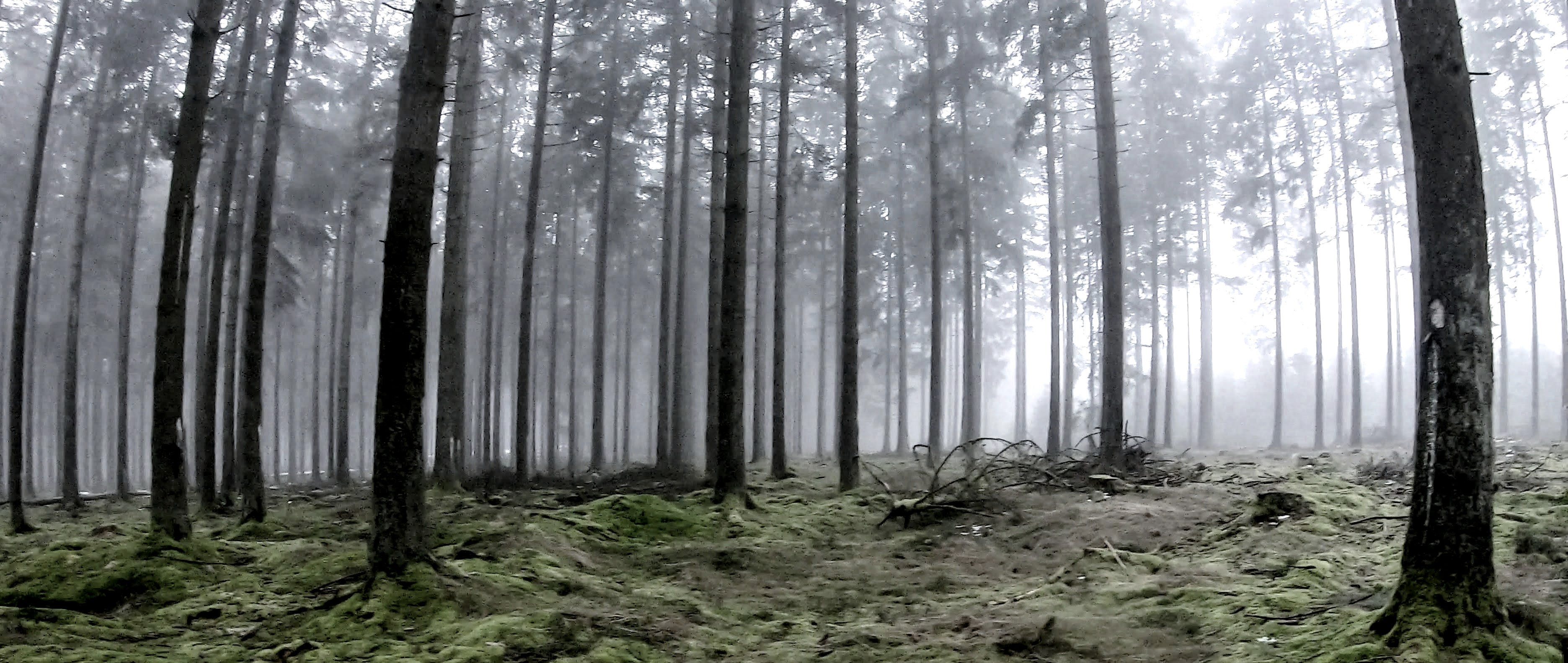
But the bars were irregular - some fatter, some thinner. This wasn’t a prison, it was a barcode. Its vertical lines wrapped all the way around me, trapping me within an immersive hyperreality of consumerism.
A crackly vinyl played in my head: “Get dragged in by the lights of the circus / That make me want shit accidentally on purpose” - Braintax.
Now the black and white lines warped into a vertiginous optical illusion, where I struggled to discern north from south, left from right, up from down. I startled; where had I come from, and where was I going? My Garmin showed an indecipherable squiggle, so I just started moving, setting a course so I could orient myself within this arboreal kaleidoscope.
But a diffuse mist was seeping in-between those previously crisp black and white lines. What was the source of this blurriness, that threatened the grand panopticon of consumerism… was it smoke from the shelling?
A fog of war was encroaching. I could picture deep snow. Frozen foxholes. Strewn corpses. Terrified souls, peering through the trees, scanning for any sign of movement. Senses straining to hear the snap of a branch, the crunch of a foot on ice. The tense calm before the artillery shelling. The devilish game of Russian roulette - playing for an amputated limb; for a slow, or sudden death.
I could see it now. This was no game, panopticon or mausoleum. This was Troy, and I Achilles; hobbled by my heel, waging a war to fulfil a quest I should never have undertaken.
It all had to stop. How can one DNF a war? Flee from fear, becoming a deserter - that wasn’t it. Retire on ethical grounds, becoming a conscientious objector - this wasn’t a question of ethics. Walk away citing strategic or tactical inefficacy, becoming a, a what… a critical thinker? That was more like it.
Is critical thinking in an army wrong?
Privates follow orders unquestioningly, otherwise they get court-marshalled. But experienced officers, they should exercise ever more independent thinking, deciding when to advance, retreat or resign, all the way up to the generals on whose shoulders it lies to set the whole strategy.
“He will win who knows when to fight and when not to fight” - Sun Tzu.
When not to fight…
I jolted out of my sleep-deprived ruminations, and was surprised to find my feet had conveyed me to the farthest extent of the WWII-infused forest. Some distance ahead, I could just about make out a square gazebo on the dirt track. A glance at my watch revealed I was 27km into the leg, so I surmised this was probably another Legends water stop.
I trotted up to greet the checkpoint team, where I counted six volunteers and a smattering of runners, including Milan. This looked like more than a water stop, for I could see food, too. I accepted some hot vegetable soup, appreciating its warmth, and this most convivial of escapes from the battlefields, physical and mental.
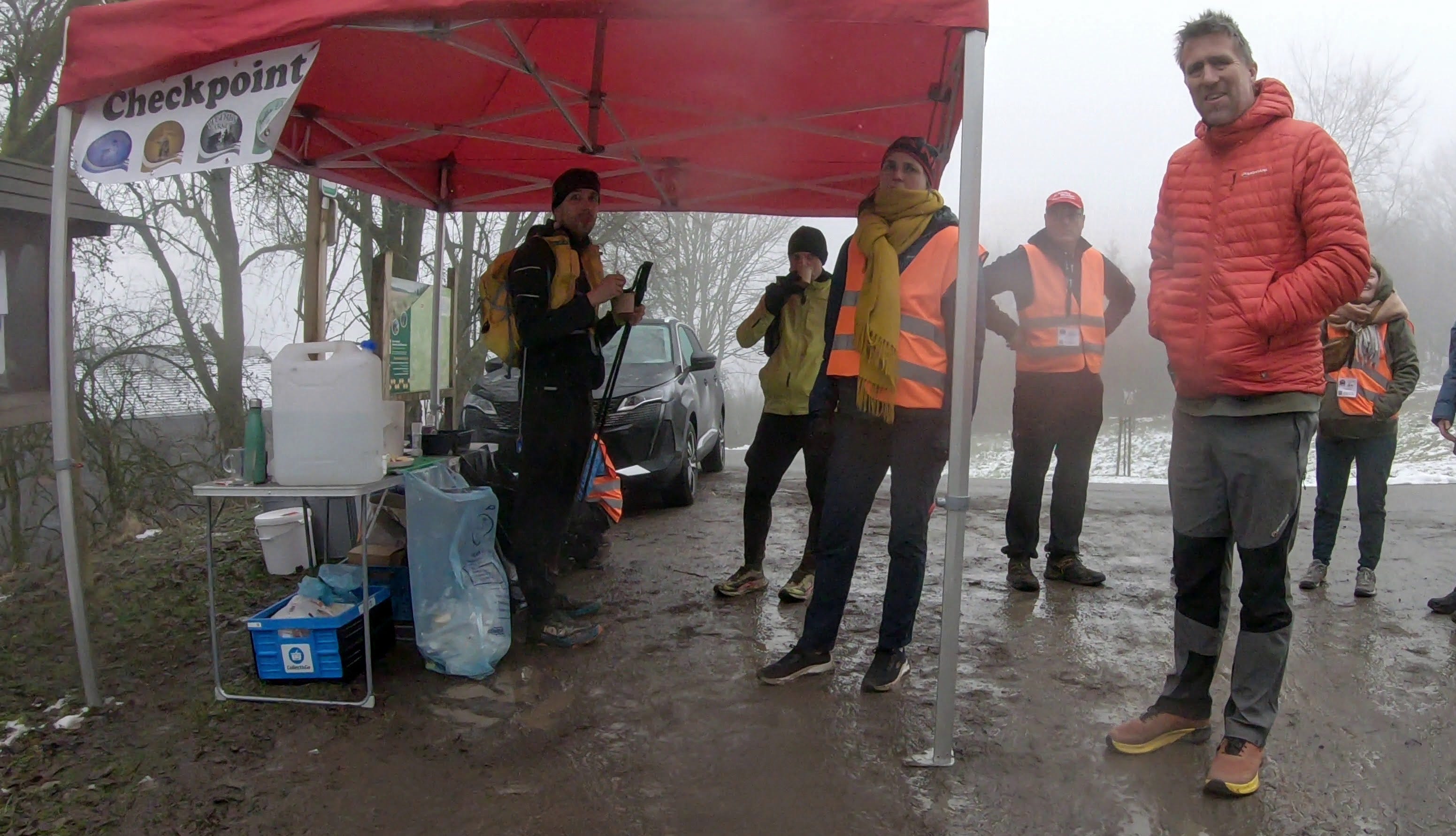
An English-speaking volunteer gave me a sit-rep. Apparently, the DNF rate they were observing on this inaugural 350km edition of the race was much higher than they’d expected. Given the current retirement rate, they thought that fewer than 30% of participants would complete the course.
I let that sit with me for a minute. 70%+ DNF rates are moreorless unheard of in ultras, outside of special cases like the Barkley Marathons, Cockbain’s most torturous challenges like The Tunnel, or the inaugural running of Winter Spine, when only 3 of its 12 participants finished.
As I received a second serving of soup, I considered why this race would be experiencing such an abnormally high attrition rate. Certainly, the course had been wet and technical at times, but all who entered would have expected as much. Of what was still to come - the High Fens and the Ninglinspo, which most of the other participants seemed to be familiar with - I could only guess.
But the volunteer was still talking, so I tuned back in. He explained that we were about 30% down the field. In other words, we were teetering right on the dividing line between those who were expected to finish, and those expected to fail.
This clarified in my mind a significant factor in this race, one that could perhaps explain its crazy high DNF rate: the cut-offs were really tight.
When I thought about it, I’d gotten off to a reasonable start. And while my Achilles had fallen apart, turning my race into more of a run-walk-hobble-stretch sort of an affair, I’d still held 20th place at CP1, and I’d only taken a 45 minute break there. I’d not fallen much further behind since. Yet; already, I was on the cusp of a potential timeout.
I set back off along the trail wondering what it all meant. Since I was planning to DNF at CP3, the fact that I was running up against the clock ought to be irrelevant - but it didn’t feel irrelevant. Having had to chase down cut-offs for the very first time in my life at NC110, and just 4 months later finding myself back in the same situation, it showed just what a bloody mess my body was in.
I thrust the cut-offs to the back of my mind in order to focus on the trail. Cool-yet-reasonable temperatures up on these higher plains were working in my favour, I reasoned. This terrain, the Fanges de Nazieufa, looked like classic swampland, but thanks to the snow and frost, all I had to contend with was slush, puddles, and a cool underfoot ‘crunch’. That, and my sodding heel.
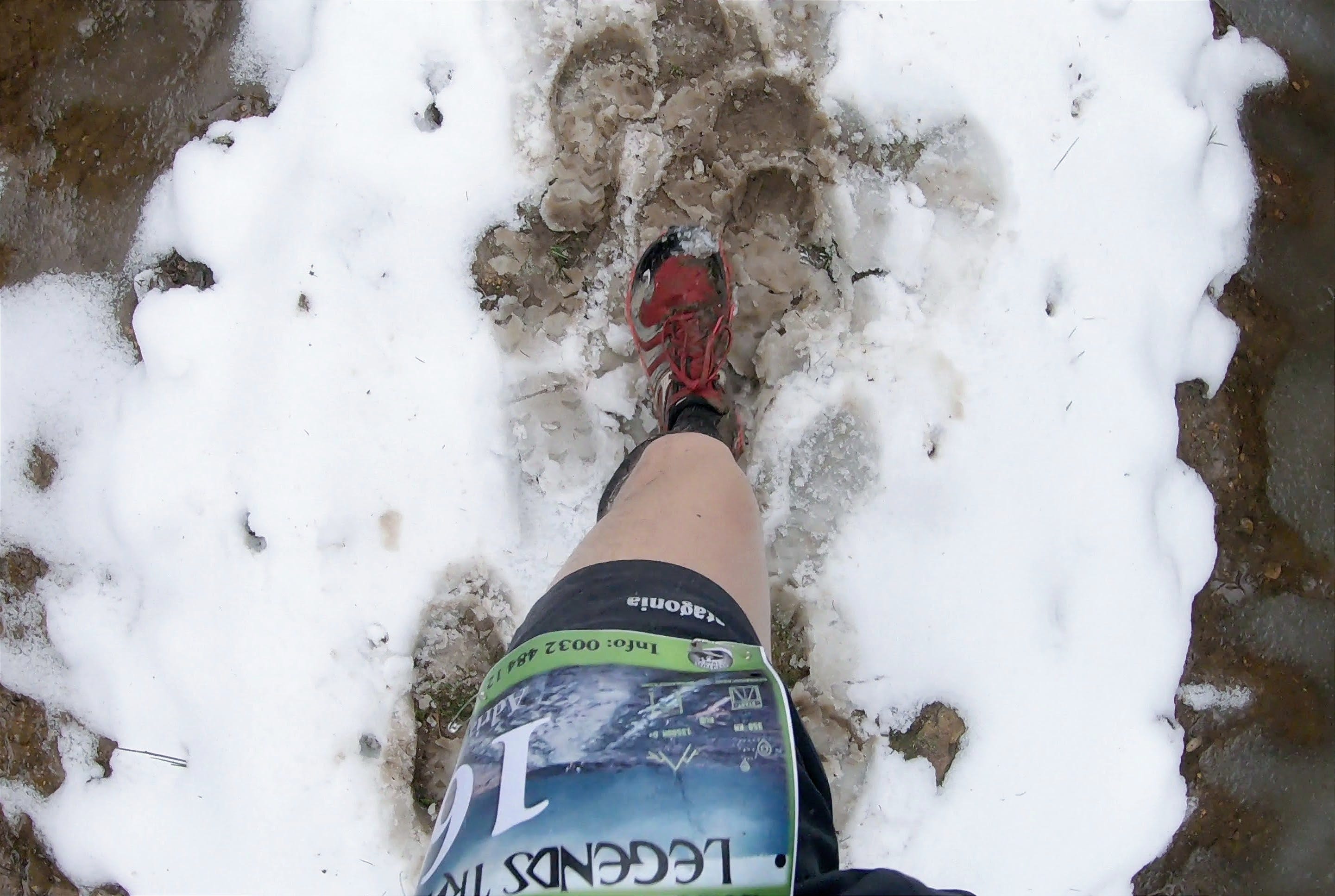
Now the GPS diverted off the path - through where, exactly? There was only tall, dense, thorny bush. Sure enough, Garmin told me I was supposed to hack through here somehow. I needed to find a main road, cross it, and join up with a trail on the other side. So I sniffed around, searching for signs of a path that those before me might have trodden, to no avail. In the end I hacked through the thorns any old how, shredding my legs and windproof in the process.
I was up to almost 700 metres elevation now. The snow was deeper here, chilling my feet and causing me to wonder whether some liner socks might improve comfort on the upcoming High Fens.
Up ahead I could see a forest - the forest of Groumont, which might, perhaps, signal the end of this exposed section. Quite unlike the barcode kaleidoscope from earlier, Groumont felt warmer, cosier and quite welcoming. This could have been Chicksands, or any one of south England’s woodlands. Here the pines were charmingly haphazard, their trunks a deep warm brown, their needles a lively, rich green.
While moving slowly, simultaneously jousting with my buggered Achilles and revelling in the sweet, intoxicating aroma of the pines, another runner caught up with me. He was a local Ardennais, though his English was impeccable.
We struck up an conversation wherein I learned his name was Eric, a policeman who lived nearby and knew these forest trails like the back of his hand. It transpired he was also in considerable pain.
He’d trained well, and had hoped to return to his colleagues with a tale of triumph and redemption. For the first half marathon, everything had gone precisely to plan, until he fell and injured his knee. Naturally, he’d battled on; but after some 80km, valiantly fighting through worsening pain, he’d reached the conclusion that he would have to bow out of the race.
When faced with a disaster like this, it’s only natural for emotion to kick in. To succumb to the loss aversion principle, double-down and push on toward self-destruction, just as Achilles had done.
But Eric wasn’t doubling down. And he wasn’t miserable, or complaining, or searching for sympathy. He was - soberly and maturely - taking his bad luck on the chin, accepting it for what it was, and looking forward to his next opportunity.
I felt impressed by Eric’s stoicism. I also saw the read-across to my situation. This race was where I must learn the lesson of Achilles. I needed to channel my inner Eric, and embrace failure when the time came.
In the time we’d been absorbed in our conversation, we’d descended some 200 metres into the depression of La Fondroule, so now came the climb up out of it. As much as I was valuing our tête-à-tête, this was the right moment to part ways, so we could each focus on managing our respective injuries. I wished Eric the best of fortune ahead, whipped out my poles, and coaxed my embattled Achilles up the sloppy climb toward Lierneux.
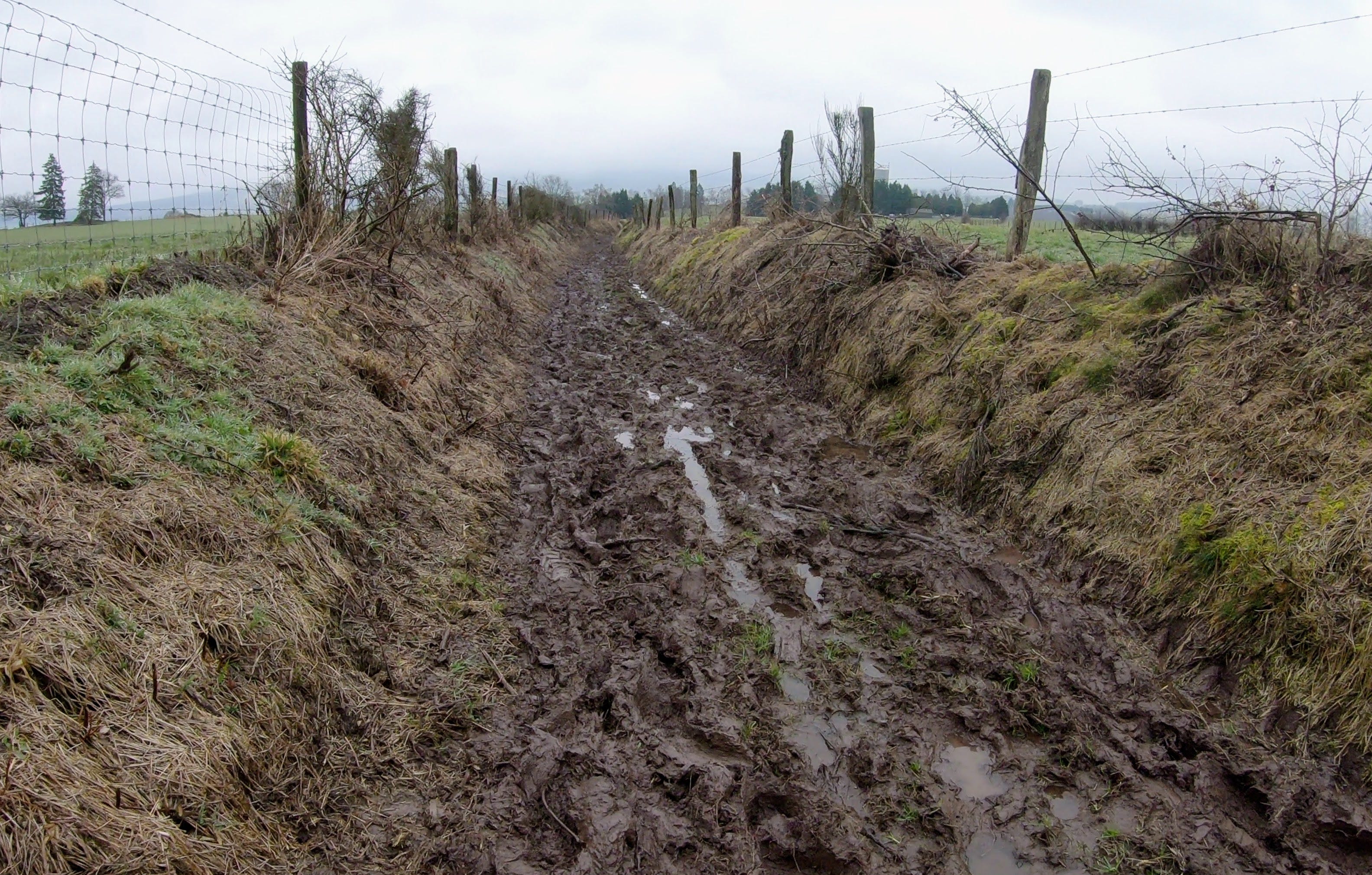
The leg ended much as it had begun, rolling over easy-going tracks & gently undulating farmers’ fields. How different this would feel if I weren’t hobbling in pain, I lamented.
My mind drifted back to the legend of Achilles. He ultimately won his battle at Troy, but what he learned afterwards invalidated the entire purpose of his fight. It was a classic pyrrhic victory. The lesson for me, surely, was that I ought to stop here at CP2, and cut my losses before doing any serious, long-lasting damage.
So why did this feel just as impossible as it had at CP1?
My thoughts meandered back to one of my all-time favourite films, the 1983 classic WarGames, where Joshua engaged in Global Thermonuclear War. Through exhausting the possibilities of his training game Tic Tac Toe, he learned that timeless lesson: the only winning move is not to play.
That was all well and good, I thought. The problem was I was already playing. I was laying an X in Tic Tac Toe. I was wielding a sword at Troy. I was blasting a trench in the Ardennes, and I was hobbling around this sodding race.
I didn’t need to be told that I oughtn’t have started this foolish thing, I could well see that now. What I needed to learn was how to stop in the thick of it.
You are incredible Adrian